The role of employee apps in crisis management and emergency communication

Crisis management and emergency communication in the digital age
In an increasingly networked world, companies are faced with the challenge of responding quickly and efficiently to crisis situations. Whether natural disasters, technical malfunctions or security-related incidents - the ability to inform and coordinate employees in real time is crucial. This is where employee apps play a central role in modern crisis management.
Real-time communication and transparency
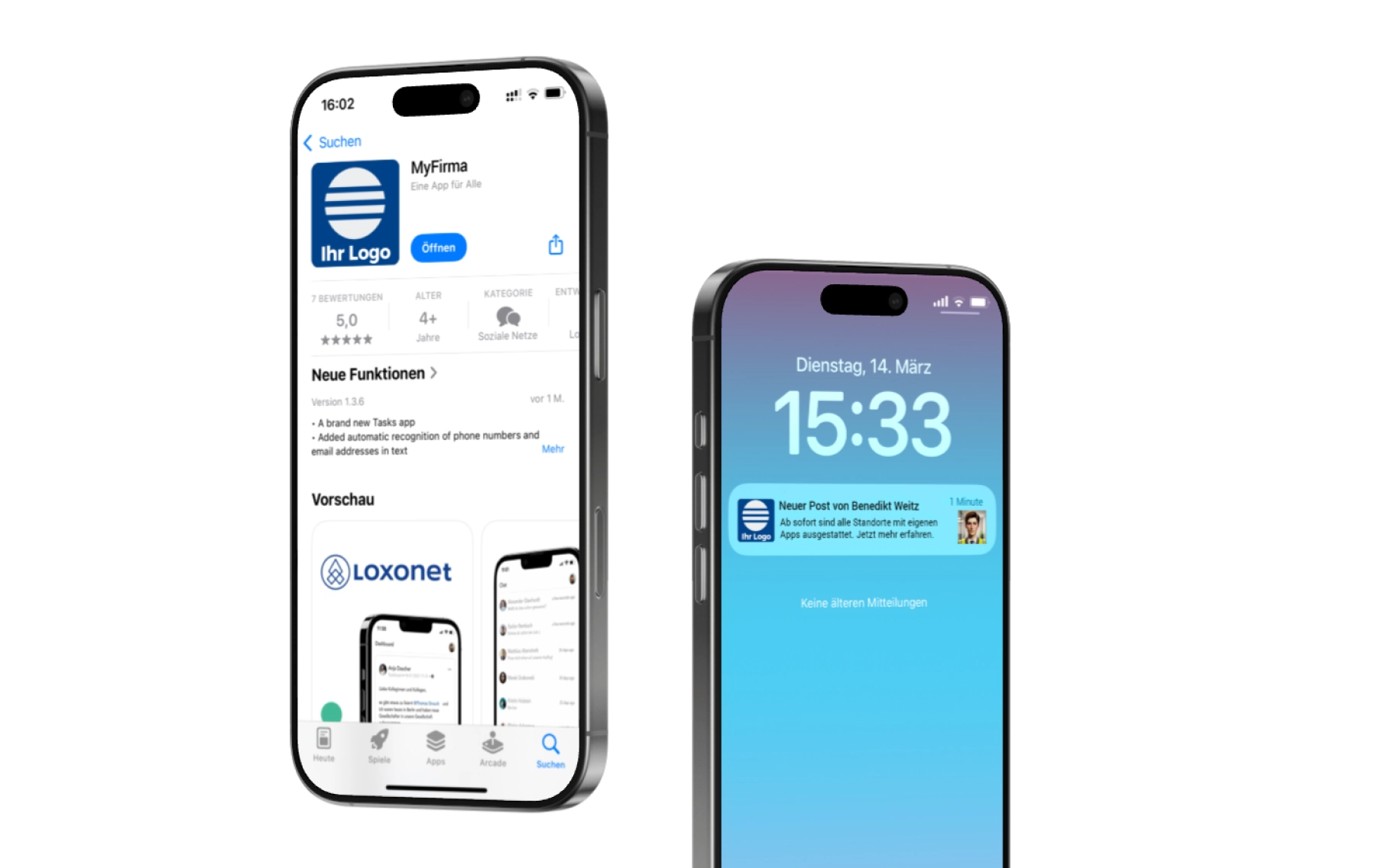
One of the greatest strengths of employee apps is their ability to transmit information in real time. In crisis situations, it is essential that all employees can be informed at the same time, regardless of their location. A well-implemented employee app makes it possible to send push notifications and updates immediately to all relevant people. Studies show that companies that use real-time communication are better able to minimize the impact of crises because misunderstandings and information gaps can be avoided.
Centralized information distribution
In a crisis situation, it is crucial that information is centralized and consistent. Employee apps offer the opportunity to create a central point of contact for all relevant information. This can take the form of special crisis or emergency channels that are set up in the app. According to a survey by the Institute for Crisis Management, 85% of companies say that a central source of information significantly reduces the risk of misinformation.
Efficient resource allocation and employee protection
In addition to pure communication, employee apps also offer the opportunity to manage resources efficiently and ensure employee protection. By integrating check-in and check-out functions, companies can see in real time where their employees are and who may be in danger. Such functions are particularly valuable in emergency situations, as they enable rapid evacuation or redirection of resources. A 2023 study by Gartner showed that companies that rely on digital tools for resource allocation were able to reduce their response time in crisis situations by up to 40%.
Documentation and follow-up
After a crisis, thorough documentation and follow-up are essential in order to learn lessons for the future. Employee apps enable the complete recording of communication processes and actions. This data can be analyzed retrospectively to identify weak points and continuously improve crisis management. According to a survey by the Federal Office of Civil Protection and Disaster Assistance, 78% of companies that follow up on crises are better prepared for future challenges.
Conclusion
Employee apps are an indispensable tool in modern crisis management and emergency communication. They not only offer the possibility of communicating in real time and distributing information centrally, but also contribute to efficient resource allocation and employee protection. The documentation and follow-up of crisis events enables companies to learn from every crisis and better prepare for future challenges. Companies that rely on such digital solutions are able to increase their resilience and remain able to act in times of crisis.