How to increase productivity with employee engagement

In today's fast-paced world of work, it's more important than ever to ensure that all employees, from office workers to blue-collar workers, are not only part of the company, but also feel like a valuable part of the team. Family-run companies face the unique challenge of combining tradition with innovation in order to both preserve the corporate culture and remain sustainable. A key strategy for overcoming this challenge is increasing employee engagement through the use of modern technologies such as employee apps. In this article, we take a look at how employee engagement can directly contribute to increasing productivity.
Employee Engagement: More than just satisfaction
Employee engagement goes far beyond just employee satisfaction. It describes the extent to which employees are emotionally committed to their company, committed to its goals and willing to go above and beyond the usual level. Engaged employees are not only happier, but also more productive, innovative and loyal.
The role of employee apps
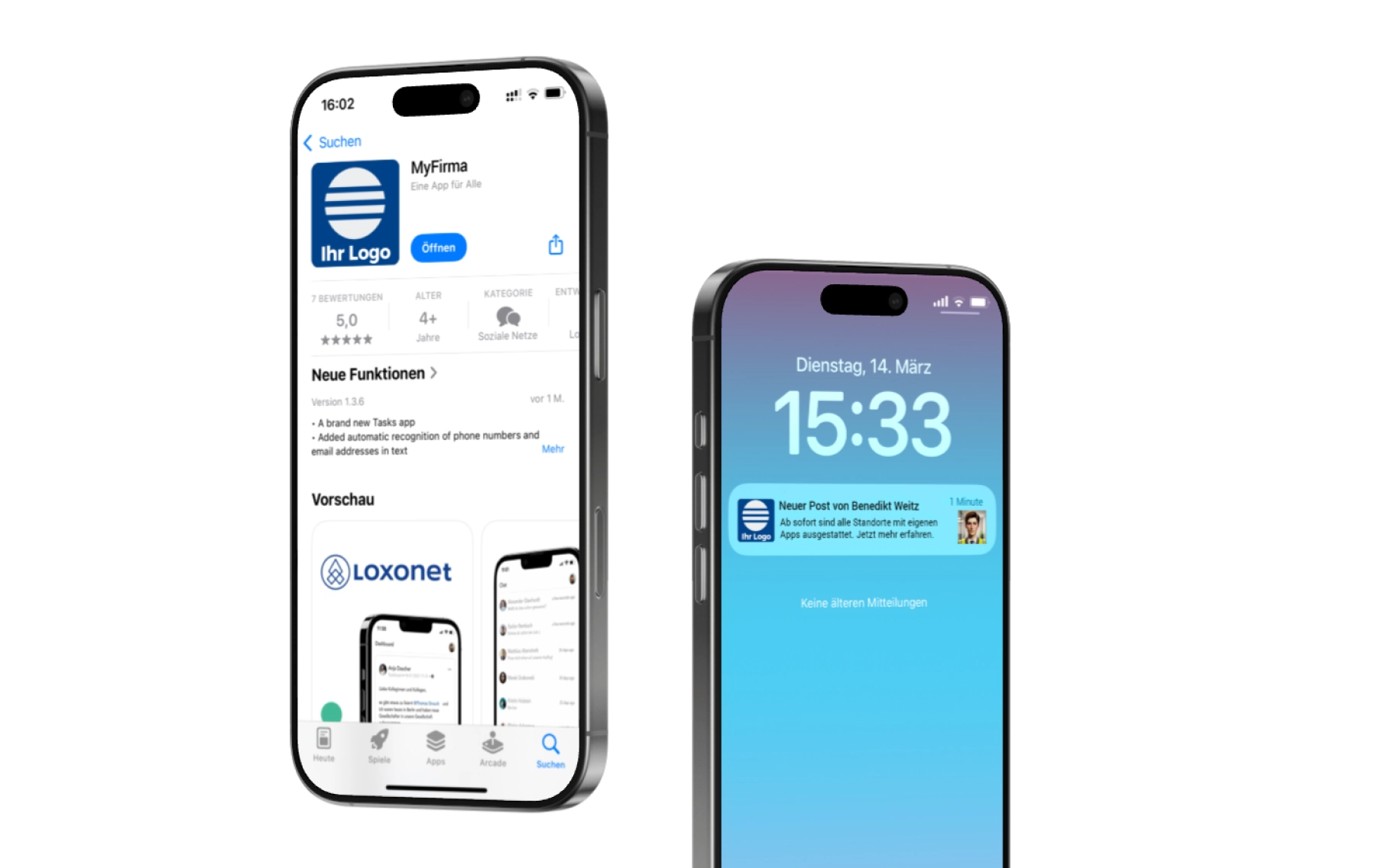
Employee apps offer a unique opportunity to connect all levels of a company and disseminate information quickly and effectively. An employee app can be a game changer, especially for blue-collar employees who may not have regular access to traditional means of communication such as email or intranet. By delivering relevant information directly to each employee's smartphone, employee apps can help increase feelings of belonging and being valued.

Increase productivity through engagement
The connection between employee engagement and productivity is clear: engaged employees are more motivated to complete their tasks efficiently and effectively. Here are some concrete ways increasing engagement can impact productivity:
Better communication: The key to increasing productivity
In any company, regardless of size or industry, effective communication is crucial. In family-run businesses, where the corporate culture is often characterized by closer personal relationships and more traditional communication channels, the introduction of modern technologies such as employee apps can make a significant difference. These digital platforms offer new opportunities to ensure that every employee, from management to production staff, is always in the loop and feels like an integral part of the team.
Immediate exchange of information
Employee apps make it possible to share information, instructions and updates in real time. This is particularly important in a dynamic work environment, where delays in information sharing can directly lead to lost productivity. Providing a centralized platform to share announcements, shift schedules, security updates and other critical information ensures every employee has access to the latest data whenever they need it.
Reduction of misunderstandings
Clear and consistent communication helps avoid misunderstandings that can lead to errors, duplication of effort, and frustration. Employee apps offer features such as confirmation buttons or feedback options that ensure that information has not only been received but also understood. This promotes a culture of transparency and mutual understanding, which is the foundation for effective collaboration and high productivity.
Promoting team spirit
In addition to simply passing on information, employee apps also offer opportunities for social interactions that strengthen team spirit and a sense of belonging. Through forums, group chats or internal social media functions, employees can share successes, seek support and recognize each other. This type of communication breaks down barriers and promotes a positive working atmosphere, which has a direct impact on motivation and thus productivity.
Adapting to different communication styles
In a diverse work environment, it is important that communication channels take into account the different needs and preferences of employees. Employee apps can be personalized to offer different formats such as text messages, videos, surveys or interactive modules. This ensures that communication is accessible and engaging for everyone, regardless of their role in the company or their personal communication style.
Continuous feedback
Another benefit of employee apps is the ability to give and receive continuous feedback. This can take the form of regular surveys, feedback buttons or open forums where suggestions and concerns can be raised. This type of two-way communication not only promotes employee engagement, but also provides valuable insights into how processes and the work environment can be improved to further increase productivity.

Higher employee retention: A key to company success
The loyalty of employees to their company is a central aspect that has far-reaching effects on the productivity and overall success of a company. Strong employee loyalty occurs when employees are not only satisfied with their daily work, but also feel emotionally connected to the company and can identify with its goals and values. This feeling of belonging and appreciation is particularly important in family-run businesses, where a close-knit community and personal relationships are often the focus.
The role of employee apps
Modern employee apps play a crucial role in strengthening employee loyalty, especially at a time when digitalization is shaping working life. These apps not only enable efficient communication and access to important information from anywhere and at any time, but also provide platforms for social interactions, recognition and feedback that strengthen a sense of community. Features like employee surveys, recognition boards, and interactive news feeds allow employees to share their opinions and successes, increasing feelings of engagement and appreciation.
Reducing fluctuation
Strong employee retention is key to reducing turnover, a problem that costs companies time and resources. Employees who feel connected to their company are less likely to seek other opportunities. This means that valuable knowledge and skills remain within the company, reducing training time for new employees and increasing overall productivity.
Long-term benefits
The long-term benefits of high employee retention should not be underestimated. Employees who remain loyal to the company over the years develop deep knowledge of the work processes, the culture and the customers. This experience makes them valuable resources who can not only work more efficiently, but also serve as mentors to new employees, which in turn increases the company's overall productivity and efficiency.
Building a positive corporate culture
Ultimately, high employee retention promotes a positive corporate culture characterized by trust, recognition and mutual support. Such a culture not only attracts talented new employees, but also motivates existing employees to do their best and commit to the company's common goals. In family-run businesses, where values and traditions play a special role, this can help build a strong and consistent brand that appeals to both customers and employees.
Promoting innovation through increased employee engagement
In an increasingly competitive and rapidly changing business environment, innovation is the key to a company's success and long-term survival. Employees who feel engaged and belong are an inexhaustible source of innovative ideas and approaches. Here are some specific ways increased employee engagement can help drive innovation:
Creativity and problem solving
Engaged employees are more motivated to think outside the box and find creative solutions to challenges. Their emotional connection to the company encourages them not only to recognize problems, but also to actively look for effective and efficient solutions. This creative problem solving is often the starting point for innovations that can optimize processes, reduce costs and increase customer satisfaction.
Open communication culture
A high level of employee engagement promotes a culture of openness where employees are encouraged to express their opinions, ideas and concerns. This open communication culture is fundamental to the innovation process as it facilitates the exchange of information and brings together different perspectives. Through employee apps and other platforms, companies can create a space where employees can express themselves freely and participate in discussions, encouraging the development of new ideas and approaches.
Willingness to experiment
Engaged employees are more willing to take risks and try new things. This willingness to experiment is essential for innovation as it enables new concepts, products and processes to be tested. A company that encourages employees to think and act innovatively creates a culture of continuous improvement where innovation can thrive.
Cross-functional collaboration
Engagement promotes collaboration across departments by breaking down barriers and improving the flow of information between different areas of the company. This cross-functional collaboration is an important driver of innovation as it enables the exchange of knowledge and experiences, leading to more holistic and well-thought-out solutions.
Commitment as an innovation catalyst
Ultimately, high levels of employee engagement act as a catalyst for innovation by creating an environment in which employees feel empowered to contribute to the company's success. By providing the right tools, like employee apps, and fostering a culture that values engagement and innovation, companies can create a positive feedback loop that increases both employee satisfaction and business performance.
Increased presence through employee engagement
One of the often overlooked ways employee engagement can directly contribute to increased productivity is increased employee presence. When employees feel connected to their workplace and recognize that their contributions are valued, they are less likely to take unexcused absences from work. This phenomenon, known as “presenteeism,” contrasts with “absenteeism,” in which employees are absent more often, which can significantly impact productivity.
Reducing absenteeism
Engaged employees demonstrate a stronger connection to their workplace, which leads to fewer absenteeism. These reduced absences mean that projects and tasks can be completed more continuously without being disrupted by frequent interruptions. This leads to a more efficient work environment where deadlines are more likely to be met and projects are completed successfully.
Improved employee health
Employee engagement also contributes to improved physical and mental health of employees. Employees who feel like they are part of a supportive team are less prone to stress and work-related illness, which in turn leads to fewer illness-related absences. By fostering a culture of care and support, companies can not only improve the well-being of their employees, but also increase their attendance and productivity in the workplace.
Strengthening the sense of community
Another important aspect of increased presence through employee engagement is strengthening the sense of community among employees. When people feel part of a group that shares common goals, they are more motivated to come to work and contribute. This sense of belonging and shared purpose can be a powerful driving force that keeps employees committed to their work even on difficult days.
Use of employee apps
Employee apps play a pivotal role in increasing exposure by providing a platform for ongoing communication and recognition. Through regular updates, recognition programs and the opportunity to give feedback, employees feel connected to their company even outside of the physical workplace. These technologies enable companies to cultivate a culture of appreciation and engagement that motivates employees to do their best every day.

Conclusion
For family-run companies that want to face the challenges of the modern market, increasing employee engagement through the use of employee apps is a crucial step. These technologies not only provide a platform for improved communication and collaboration, but also promote an inclusive work environment that values and includes all employees. Ultimately, higher engagement leads to a more productive, innovative and resilient workforce that can lead the company into the future.